Consoul Solutions LLP

Vani Garg

CRM Metrics That Actually Show If a Journey Works

The Metrics That Actually Tell You If a Journey Is Working

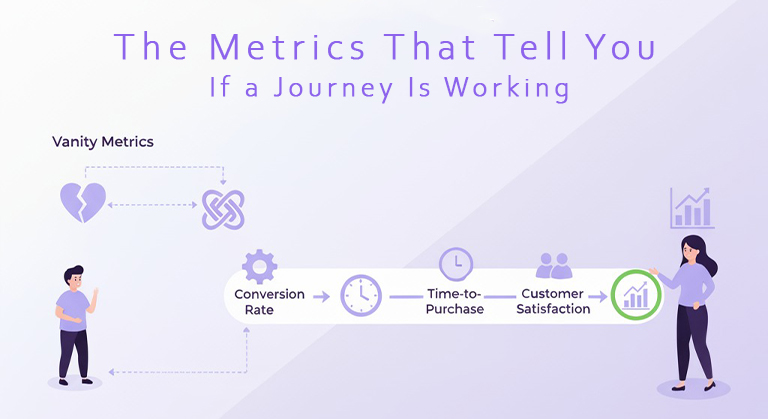
Beyond open rates — what to track if you care about behavior and retention  In today’s customer-centric marketing landscape, journeys have replaced campaigns as the focal point of engagement strategies. Yet, many marketers still rely on surface-level indicators like open rates and click-through rates to evaluate performance. While these metrics are easy to measure, they rarely tell the full story — especially if your goal is to drive meaningful behavior and improve retention.  This article explores the deeper, more insightful metrics that actually show whether a journey is working. If you’re serious about understanding customer behavior and improving retention, these are the numbers that matter.  1. Why Open Rates and Click Rates Aren’t Enough Open rates tell you if someone opened your message, and click rates tell you if they clicked. But neither metric reveals whether the message led to any meaningful action. Opens and clicks can inflate your sense of success while masking drop-offs further down the funnel.  In an era where privacy changes (e.g., Apple Mail Privacy Protection) are also impacting tracking accuracy, marketers must shift their focus from these vanity metrics to outcomes that reflect actual user engagement and behavior.  2. Engagement Depth: Session Duration, Scroll Depth, and Content Consumption When a user interacts with your journey, how much time do they spend with your content? Do they scroll through it, consume key information, or bounce quickly?  Metrics like session duration and scroll depth provide a more nuanced picture of user interest. For example, a customer who clicks a link and spends five minutes exploring your content is far more engaged than one who clicks and immediately leaves.  Tracking these behavioral signals helps determine if your journey content is compelling and relevant enough to hold attention.  3. Action Completion: Micro and Macro Conversions Ultimately, every journey has an intended outcome — whether it’s signing up for a program, completing a profile, adding a product to a cart, or making a purchase.  Track both micro-conversions (smaller steps along the way, such as viewing a product video or saving an item to a wishlist) and macro-conversions (final goals like purchases or subscriptions). This provides insight into whether your journey is effectively guiding users toward meaningful actions. 4. Time-to-Next-Action: Measuring Momentum An effective journey should drive momentum. Are users quickly progressing from one step to the next? Or is there a delay between your communications and their subsequent action?  Time-to-next-action measures the average time between journey touchpoints and customer responses. Faster progression often correlates with higher engagement and a more seamless journey experience.  If this metric is lagging, it may suggest friction points or poor content alignment at certain stages.  5. Drop-Off Points and Silent Exits Where do users disengage from your journey? Identifying drop-off points is critical to optimizing flows and removing friction.  Silent exits — where users stop engaging without explicitly opting out — can indicate content fatigue, irrelevant messaging, or an overly complex journey.  Analyze journey-level attrition to pinpoint stages where improvements can retain more users. 6. Retention Rate Over Time: Cohort Analysis One of the best indicators of a successful journey is whether it positively influences customer retention.  Use cohort analysis to track retention rates over time, comparing users who have been through specific journeys with those who haven’t. For example, do customers who receive a tailored onboarding journey stay longer and purchase more than those who don’t?  This approach ties journey effectiveness directly to long-term customer value.  7. Repeat Engagement and Frequency Retention is not just about preventing churn — it’s about fostering consistent, ongoing engagement.  Track how often users who complete a journey return to interact with your brand again. Are they opening future communications, browsing again, or transacting more frequently?  Repeat engagement is a strong signal that your journey has successfully established a relationship that extends beyond the initial interaction.  8. Churn Signals and Negative Behaviors Sometimes, what customers don’t do is as important as what they do.  Monitor churn signals such as declining engagement rates, reduction in session time, or increased time between purchases. Negative behaviors can help predict future attrition, giving you time to intervene with win-back strategies or revised journey touchpoints.  Proactive measurement of these signals ensures your journeys remain dynamic and responsive. 9. Lifetime Value (LTV) Uplift by Journey Participants Ultimately, the strongest test of any journey is whether it drives increased lifetime value.  Compare the average LTV of users who complete a journey versus those who don’t. If your journeys are effective, these users should have higher purchase frequency, larger average order value, or greater overall spend over time.  LTV uplift demonstrates that your journey investments are contributing to meaningful commercial outcomes. 10. Feedback Signals: Explicit User Feedback and Preferences In addition to passive behavioral data, actively seek feedback from journey participants. Quick pulse surveys or preference updates can provide insight into journey effectiveness and satisfaction.  This feedback loop not only measures performance but also allows you to refine personalization and segmentation, making future journeys even more effective.  Conclusion: Moving Beyond Vanity Metrics  If you care about behavior and retention, success isn’t about how many people open an email — it’s about what they do next and how they engage long-term.  At ConSoul, we help brands measure journey effectiveness with a focus on behavior, momentum, and lifetime value, not just campaign performance.  The next time you review your journey metrics, ask yourself: Are we measuring what matters?  Move beyond vanity metrics. Measure real behavior. And design journeys that retain, engage, and convert. 

The Metrics That Actually Tell You If a Journey Is Working Read More »
Rethinking Inactive Users: How to Engage the Semi-Engaged

Rethinking Inactive Users – Not Everyone Who’s Quiet Is Lost

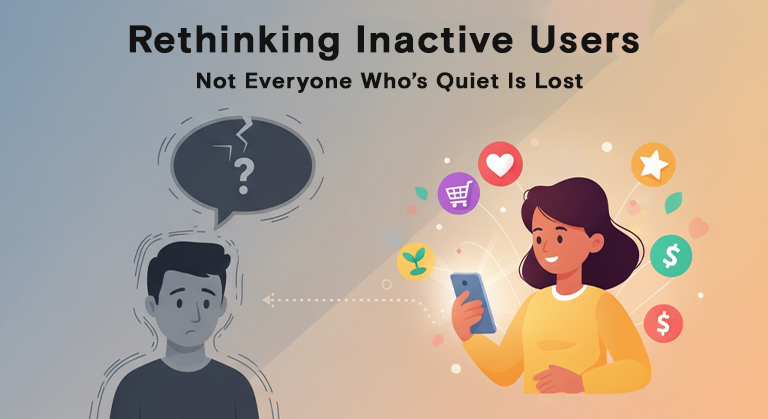
In most lifecycle marketing and CRM strategies, users tend to be segmented into neat buckets: active, dormant, churned, and loyal. But reality is rarely this clean. Many users fall into a grey area — seemingly inactive but quietly engaged in ways that traditional dashboards don’t capture.  This group is often overlooked or misclassified as lost. Brands rush into aggressive reactivation tactics that feel irrelevant, intrusive, or unnecessary, missing the opportunity to design journeys that respect a user’s current state.  It’s time to rethink what inactivity means and build low-pressure journeys for the semi-engaged.    What does “inactive” really mean?  In most CRM setups, inactivity is defined in simplistic terms: no purchase in the last 30 days, no session in 14 days, or no response to the last few campaigns.  But this definition misses nuance.  What about the customer who reads your emails but hasn’t clicked yet?  Or the user who browses your app periodically but hasn’t checked out?  These users are still present — observing, considering, and engaging at their own pace. Labeling them “inactive” simply because they haven’t converted recently leads to poorly targeted interventions.  True inactivity is not just the absence of transactions. It’s the absence of all meaningful signals.    Silent signals: The behavior you might be missing  Many quiet users leave digital footprints that don’t immediately lead to conversion but indicate latent intent or awareness.  These silent signals include:  Email opens without clicks: Users who remain subscribed, open emails, but take no further action  Browsing sessions without purchase: Returning visitors who explore categories, view products, or check prices  Wishlists and saved items: Activity that shows interest but at a later purchase horizon  App sessions without transactions: Casual check-ins to browse new arrivals or monitor offers  These are not dormant users — they’re quiet but present.  They require nurturing, not rescue.    Why aggressive reactivation can backfire  The standard playbook for inactive users often leans into urgency: heavy discounting, repeated retargeting, frequent follow-ups.  While this may work for genuinely dormant customers, applying the same strategy to semi-engaged users risks alienation:  Email fatigue: Excessive frequency drives unsubscribes or inbox blindness  Irrelevant timing: Pushing offers when the user isn’t ready feels pushy rather than helpful  Missed opportunity to build trust: Aggressive outreach suggests a brand is not paying attention to actual user behavior  In short, treating all quiet users as if they’re lost can cause more harm than good.    Low-pressure journey design for the semi-engaged  So how can brands nurture the semi-engaged without overwhelming them?  The answer lies in low-pressure, contextually relevant journeys:  Gentle reminders: Occasional prompts about saved items or categories browsed  Content-driven touchpoints: Curated emails or app notifications showcasing new arrivals, guides, or recommendations rather than pushing promotions  Behavior-based personalization: Customizing communication based on recent passive signals (e.g., if a user browsed but didn’t add to cart, show related products)  Respectful retargeting: Using soft retargeting (e.g., native app banners) instead of repeated ads across platforms  This strategy requires a mindset shift from chasing immediate conversion to sustaining light engagement until the user is ready.    Measurement beyond transactions  Redefining inactivity also means expanding how we measure success.  Instead of measuring success purely by purchases or conversions, marketers should consider:  Return visits: Even if they don’t convert, are users coming back to your site or app?  Scroll depth and session time: Are they engaging meaningfully with content?  List engagement: Are they opening emails consistently, even if they don’t click?  Wishlist activity: Are they curating products or expressing future intent?  Tracking these signals helps marketers distinguish between truly dormant users and those who are just on a slower path to conversion.    Case example: A nuanced retention fix in eCommerce  An eCommerce brand we worked with had a standard 30-day reactivation campaign triggered when a user didn’t purchase within 30 days.  Analysis revealed a group of “quiet browsers” — users who hadn’t bought anything in 45 days but continued to browse once a week and open emails regularly.  Instead of treating them as dormant, we designed a low-pressure journey:  Monthly curated content emails (e.g., lookbooks, editor’s picks)  Occasional wishlist nudges  Personalization based on browsing categories  Result:  A 1.8x lift in eventual conversion compared to aggressive discount-driven reactivation emails.  The key was recognizing that these users weren’t lost — they just didn’t need urgency-based intervention.    Takeaway: Respecting quiet users in lifecycle strategy  Many lifecycle strategies focus heavily on the loud signals: transactions, cart additions, form fills.  But modern marketers need to listen for the quieter signals too: browsing behavior, content engagement, wishlist activity.  Not every quiet user is a lost customer.  Many are still engaged — just at their own pace.  By designing low-pressure, thoughtful journeys for this segment, brands can:  Reduce unsubscribes and churn  Build long-term trust and affinity  Improve conversion over time — without aggressive discounts or intrusive campaigns    A simple checklist to get started:  Redefine inactivity based on behavior, not just absence of transactions  Identify semi-engaged segments who may not need rescue  Design soft-touch journeys with content, curation, and personalization  Measure intent signals and micro-engagements alongside conversions  Respect user pace and avoid over-targeting    In today’s competitive environment, retention and loyalty aren’t just about fighting churn — they’re about understanding nuance.  Quiet users might not look “active” at first glance — but with the right strategy, they can become some of your most valuable customers over time.   

Rethinking Inactive Users – Not Everyone Who’s Quiet Is Lost Read More »

Why “Best Practice” CRM Underperforms in Real Businesses

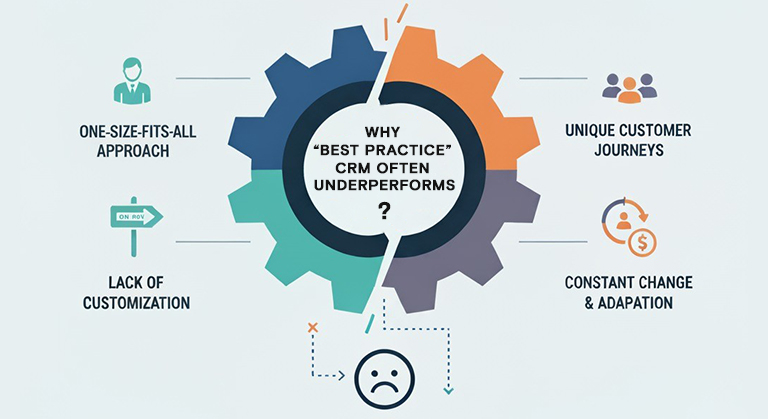
Why “Best Practice” CRM Often Underperforms

How generic playbooks can backfire in context-specific businesses  Customer Relationship Management (CRM) is no longer a nice-to-have — it’s at the center of how businesses engage, retain, and grow their customer base. But as CRM tools and templates have proliferated, so has a dangerous mindset: that simply adopting “best practices” guarantees results.  In reality, many businesses that implement so-called best practice CRM journeys often discover that these approaches underperform, failing to deliver the promised improvements in retention, engagement, and loyalty. Why does this happen? The answer lies in the nature of “best practices” themselves — they’re generic by design, and your business isn’t.  The Myth of “Best Practice” in CRM  The term “best practice” is appealing because it promises predictability. It suggests that if something worked for one brand, it will work universally. CRM vendors, consultants, and even some marketing teams promote playbooks as shortcuts to better customer journeys — onboarding templates, engagement cadences, reactivation flows.  But what’s missing is context.  Your customer journey is shaped by what you sell, to whom, in what market, and under what conditions. What worked for a high-frequency transactional eCommerce brand might fail for a financial services provider, where trust and relationship-building are key. Simply copying and pasting a CRM framework ignores the fundamental differences in customer behavior and business models.    Context Matters: CRM must reflect business differences  Customer expectations vary drastically by industry, product, and geography. Consider these examples:  A D2C beauty brand where customers purchase monthly and expect quick communication vs.  A mortgage lender where decision cycles stretch over months and involve complex paperwork.  A single cadence or messaging strategy cannot serve both.  Even within industries, purchase frequency, buyer intent, and the emotional stakes of a decision dictate different approaches. What’s the average lifecycle of your customer? What’s the key trigger for churn? Which touchpoints matter most?  Failing to adjust CRM programs for these nuances often results in two things: wasted effort and frustrated customers.    When “best practice” creates friction  Ironically, blindly following best practices can actively harm customer relationships.  Some common issues include:  Over-automation: Treating every customer the same leads to generic, impersonal experiences.  Inappropriate cadence: Communicating too frequently or too infrequently because a playbook dictated it, not because the customer signaled it.  Channel mismatch: Sending email when the customer prefers WhatsApp or push notifications.  Ignoring cultural and regional preferences: A campaign template from one market may alienate customers in another.  This friction erodes trust and reduces engagement. When customers sense that interactions are automated and irrelevant, they disengage quickly — and regaining that engagement becomes costly.    The Cost of Ignoring Business-Specific Signals  CRM works best when it helps you respond to real behavior, not just run campaigns.  By rigidly following best practices, brands miss the signals that matter most to their specific customer base:  Low-frequency, high-value customers might churn quietly if journeys are geared toward frequent buyers.  Loyalty customers could be sent irrelevant cross-sell offers if segmentation ignores actual purchase patterns.  Onboarding flows could overwhelm customers if they aren’t aligned with the complexity of the product or service.  Every day a CRM journey fails to recognize these nuances, it costs real revenue — not just in lost conversions but in wasted marketing resources and declining trust.    Principles for a Context-Aware CRM Strategy  So how should businesses think differently?  Start with your customer’s behavior, not a template:  Map your unique customer journey based on how your customers actually engage, buy, and return.  Segment intelligently:  Go beyond demographics or transaction history — segment by lifecycle stage, engagement patterns, and intent signals.  Balance automation with relevance:  Automated doesn’t have to mean impersonal. Invest in dynamic journeys that adjust based on recent actions (or inactions).  Ensure flexibility in your MarTech stack:  Best-practice templates often reflect the limitations of rigid systems. Ensure your tools allow iteration and customization as your insights evolve.  Test, learn, iterate:  Your CRM journey is never “done.” Continually monitor performance and adapt flows based on real outcomes, not assumptions.    Case Examples: How Tailored CRM Beats Best Practice  At ConSoul, we’ve seen firsthand how tailoring CRM to context outperforms generic approaches.  For example:  In OTT platforms, we helped move beyond a standard cart abandonment-style “resume watching” reminder to journeys triggered by content category, device usage, and viewer recency, lifting reactivation rates by 2x.  In retail, we redesigned onboarding to recognize that a first-time buyer of a premium product required slower, more educational follow-up rather than immediate cross-sell nudges — improving second purchase rates significantly.  For a financial services client, we removed unnecessary communications during sensitive onboarding stages (like KYC and documentation) where a “best practice” flow would have overwhelmed users.  In each case, success came not from reinventing CRM fundamentals but from applying them in ways that made sense for the customer and business.    CRM is Strategy, not Software  At its core, CRM is not about software or templates — it’s about relationships.  A CRM journey that works beautifully for one business might underperform dramatically for another simply because customer expectations, purchase cycles, and behavior patterns are different.  The lesson is clear: best practices can be a starting point, but they should never be the finish line.    Final Takeaway  If your CRM program isn’t delivering, it’s worth asking:  Are you following what’s “best” for another business? Or have you tailored your approach to fit your unique customer, product, and market context?  At ConSoul, we help brands move beyond templates — designing CRM strategies that reflect the real journeys of their customers, not just the playbook of the moment. 

Why “Best Practice” CRM Often Underperforms Read More »

Driving Subscription Growth with Character-Led Content Experiments

Driving Subscription Growth with Character-Led Content Experiments | Pooja Dhoka | https://www.linkedin.com/in/pooja-dhoka/

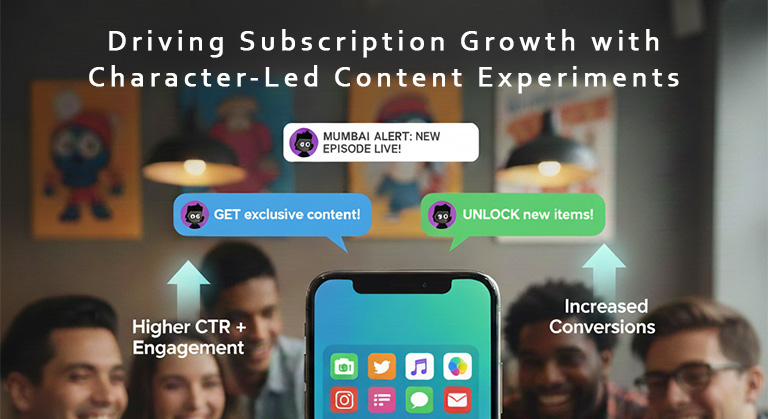
iWant, a leading OTT platform catering to Filipino audiences globally, offers a wide range of dramas, films, and original content. With an expanding content library, iWantTFC sought to improve conversion and retention through hyper-targeted messaging and viewer-centric content strategies.  The Challenge: Understanding Granular Creative Impact  IWant consistently released high-performing content, but traditional campaign approaches lacked as we couldn’t tell which specific characters or storylines truly made people watch more or sign up. This felt like a missed opportunity! We wanted a better way to understand what content elements really captured our audience’s attention, so we could create more personalized and effective messages. Our main goal was to find out exactly which character-focused stories led to more subscriptions and kept viewers coming back.  Our Objectives: Data-Driven Personalization  Our collaboration focused on the following key objectives:  Identify which character-led narratives drive the highest subscription conversions.  Test and validate character-level impact on engagement, new user acquisition, and re-engagement.  Utilize data-driven personalization to shape future campaign creatives and targeting.  Our Approach: A/B Testing Character-Driven Variants  We began with a comprehensive campaign performance audit, analyzing character-driven variants in two flagship shows from the lot. A structured A/B testing framework was then deployed:  Creative Strategy: Messaging was tailored around different character-centric narratives, keeping the call-to-action and format consistent.  Audience Segmentation: Campaigns were deployed across new, returning, and dormant user segments.  Channels & Tools: Push notifications were delivered through a marketing automation platform, with cohorts and user behaviors tracked via an analytics platform.  Performance Metrics:  New User Acquisition  Continued Watching Rate (as a proxy for engagement)  Subscription Conversion Rate (CVR)    Remarkable Results & Impact The character-led content experiments yielded significant uplifts across key performance indicators: Metric Uplift / Multiplier Subscription Conversions +52% Re-engagement 49× New User Acquisition 7× Youth-Focused Content Conversion +26% Conclusion: Actionable Insights for Future Growth This character-level experiment conclusively validated our core hypothesis: specific storytelling elements, particularly individual characters, possess a dramatic influence on OTT user behavior. These findings will directly influence future campaign planning, optimize content investment strategies, and refine audience targeting, ensuring data-driven decision-making fuels their continued growth and engagement.

Driving Subscription Growth with Character-Led Content Experiments | Pooja Dhoka | https://www.linkedin.com/in/pooja-dhoka/ Read More »

Driving Personalization by Automated Catalog Integration

Driving Personalization by Automated Catalog Integration | Nibedita Swain | https://www.linkedin.com/in/nibedita-swain-528406246/

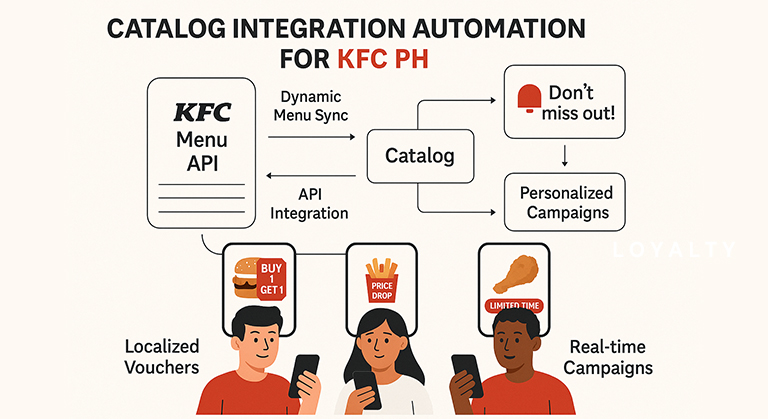
KFC Philippines is a leading name in the Quick Service Restaurant (QSR) industry, serving customers nationwide with its signature flavors and innovative offerings. With a strong presence across the country, the brand caters to over 1 million monthly app users, delivering a seamless food ordering and delivery experience. Known for its dynamic menus and high daily order volume, KFC Philippines continues to set the standard for convenience, quality, and customer satisfaction in the fast-paced food service market. Problem Statement  KFC Philippines was manually syncing their product catalog to MoEngage for use in CRM campaigns like push notifications and in-app content. Their marketing and CRM teams faced:  Manual catalog creation and uploads using Postman  No automated process to reflect daily menu changes or price updates  High dependency on technical teams for even minor product changes  Missed personalization opportunities due to stale or inaccurate catalog data  The challenge was directly tied to personalization, lifecycle engagement, and campaign agility. With frequently changing menus, mismatches between live offerings and campaign content were causing engagement rates to drop over time.  Objectives  Automate catalog sync between KFC’s internal product API and MoEngage  Ensure updated product pricing, availability, and URLs in real-time  Eliminate manual JSON formatting and Postman steps  Enable CRM teams to confidently use Content Blocks in push and email  Build a replicable solution for other brands or regions  Audit & Discovery We analyzed the existing setup and campaign stack: Platforms Audited: MoEngage Catalog Module, Postman, KFC Menu API Key Gaps Identified:  No automated sync or catalog creation mechanism  Duplicate and inconsistent product IDs across days  Missing product URLs and stale images in campaigns  No process to handle deleted or discontinued items  No historical logging or rollback capability     Solution & Approach Created a fully automated pipeline that fetches, formats, and syncs product data daily  Introduced product ID normalization to prevent duplication  Added logic to handle deletions and prevent content mismatches            1. Tech/Tool Execution Developed a Python-based script to:  Pull data from KFC’s internal menu API  Scrape official KFC website to attach product URLs  Format it for MoEngage Catalog schema  Create catalog dynamically (if not already created)  Push or patch product data in batches of 50  Delete removed items from catalog  Tech-Agnostic and scalable across brands            2. Personalization Layer Mapped each product with:  Live price and availability  Description and image  Category and product page URL  Used this data to drive personalized content blocks for:  Time-sensitive promos (e.g., lunch only)  Trending items  Out-of-stock suppression            3. Measurement             Logged each sync run with:  Items added / updated / deleted  Response status from API  Failures for alerting  CRM tracked uplift in:  Push open and CTR  Catalog content impression-to-click ratios  Tested changes in a staging catalog before going live   Results & Impact Quantitative Outcomes:  100% automation of catalog sync with zero human input  Reduced catalog update time from 2 hours to <10 minutes  Uplift in CTR for catalog-driven push notifications  100% product coverage with accurate URLs and pricing  Qualitative Outcomes:  CRM team became fully independent from tech teams  Content Blocks are now confidently used for product promotion  Elimination of campaign delays due to catalog errors  Ready-to-scale solution for other brands (e.g., Taco Bell, Pizza Hut)   

Driving Personalization by Automated Catalog Integration | Nibedita Swain | https://www.linkedin.com/in/nibedita-swain-528406246/ Read More »

From Segments to Signals: CRM Personalization That Works

From Segments to Signals: The Shift CRM Teams Need to Make

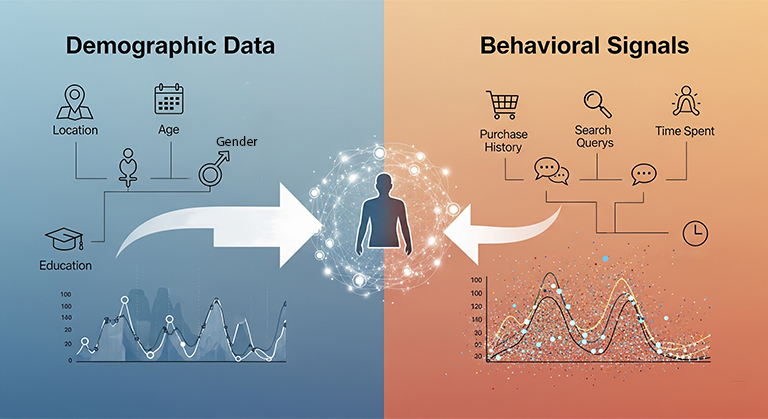
Why real personalization starts with behavior, not demographics  For years, customer relationship management (CRM) strategies have centered around segmentation. Marketers grouped audiences by age, gender, income, geography — and used these static buckets to deliver campaigns. While this demographic lens was once effective, today it falls short of capturing the complexities of how customers behave in real time.  Modern consumers don’t fit neatly into predefined segments. Two customers in the same demographic bracket can exhibit radically different interests, intent, and loyalty. As digital journeys become more fragmented and non-linear, CRM teams need a new approach — one that shifts focus from broad segments to precise behavioral signals.  This blog explores why that shift is essential, how it unlocks meaningful personalization, and what CRM teams can do to start transitioning today.  The Limits of Demographic Segmentation  Demographic segmentation feels intuitive: group people by observable traits, assume similar behavior, and tailor communications accordingly. But the cracks in this model are clear:  Similar people, different behaviors:  Two individuals in the same age group may have vastly different browsing, purchasing, and engagement patterns.  Static data, dynamic consumers:  Demographics are static by nature — your age or gender doesn’t change quickly, but your intent, preferences, and needs evolve rapidly, often within days or even hours.  Over-reliance leads to irrelevance:  Demographic targeting alone often results in generic messaging, missing what customers actually care about in the moment.  In a world where consumers expect tailored, timely, and contextually relevant experiences, CRM teams must recognize that demographic segments alone offer an incomplete picture.   Understanding Behavioral Signals: What CRM Teams Should Track  Real personalization starts with understanding what a customer is doing now — their behaviors, signals, and journeys.  Behavioral signals reflect intent, interest, and engagement more reliably than demographic attributes. Some key signals CRM teams should monitor include:  Recency: When was the last interaction (visit, purchase, engagement)?  Frequency: How often is a customer interacting with your brand?  Purchase patterns: What categories, price points, and brands are they gravitating towards?  Abandonment behavior: Did they browse but not buy? Add to cart but not complete checkout?  Content consumption: What blogs, videos, or guides have they viewed recently?  Lifecycle stages: Are they a first-time visitor, returning user, dormant customer?  The shift is about understanding customers as fluid participants in their journey, rather than fixed members of a static segment.  Examples of Behavior-Led Personalization in Action  Let’s take a few practical examples to illustrate this shift:  Abandoned Cart vs. Browse Abandonment  Traditional CRM strategies might treat all visitors aged 25-34 the same. A behavior-led approach would recognize two vastly different scenarios:  Visitor A added products to cart but didn’t check out  Visitor B browsed multiple categories without adding anything  Each requires a different message and timing — behavior determines relevance, not demographics.  OTT: Binge Watchers vs. Casual Browsers  In OTT platforms, two users might share demographic similarities but behave differently:  User A consistently binge-watches full seasons  User B samples one or two episodes sporadically  Treating them as one “segment” undermines opportunities to drive deeper engagement. Behavioral signals help tailor nudges like watchlist reminders, personalized recommendations, or upsell offers.    Why Timing Matters More Than Targeting  Behavior-led CRM doesn’t just improve relevance; it improves timing.  Traditional segmentation results in campaigns planned weeks or months in advance, often missing the customer’s moment of need. Behavioral signals allow teams to respond in real time — when intent is highest.  A few minutes can make all the difference:  Responding instantly to a lead form submission  Re-engaging a shopper within hours of cart abandonment  Triggering reminders when an active subscriber shows signs of declining engagement  CRM teams that act on behavior reduce the gap between “interest” and “action,” improving conversions, retention, and customer satisfaction.    Transitioning from Segments to Signals: How to Start  This shift doesn’t require a complete overhaul overnight. CRM teams can take small, meaningful steps to evolve their approach:  Identify your top behavioral signals:  Audit your current CRM data — what real-time behaviors can you already track (e.g., cart abandonment, last login, product views)?  Automate responses to common signals:  Start simple — automated cart recovery emails, reactivation journeys for dormant customers, or reminders for incomplete registrations.  Test timing and relevance:  Move beyond broad campaign calendars to experiment with event-triggered communications, driven by real-time behavior.  Integrate your MarTech stack:  Ensure CRM, analytics, and communication platforms are integrated to allow smooth handoff of behavioral data into campaigns.  These foundational steps build toward a system where personalization is dynamic, timely, and aligned with real-world customer journeys.    Measuring Success: What to Track  Shifting from segments to signals should translate into measurable gains. CRM teams can assess their progress by tracking:  Conversion lift on behavior-triggered campaigns vs. broad campaigns  Reduction in cart abandonment or churn rates  Increases in repeat purchases, watch time, or session frequency  Overall improvement in engagement metrics like email open and click-through rates  The goal is clear: use behavioral understanding to engage customers smarter and faster, driving higher lifetime value.   Conclusion  The era of broad segmentation is ending — not because demographic data is irrelevant, but because it’s incomplete.  In today’s landscape, personalization starts with understanding behavior: what people are doing, when, and why.  CRM teams that shift from static segments to dynamic behavioral signals gain a deeper, more precise understanding of their audiences. This unlocks timely, relevant, and effective engagement — turning potential churn into retention, and one-time buyers into loyal customers. 

From Segments to Signals: The Shift CRM Teams Need to Make Read More »

The Real Reason CRM Journeys Fail and How to Fix Them

The Real Reason CRM Journeys Fail (And It’s Not the Tool)

Why poor logic and overlap – not platform choice – leads to drop-offs and fatigue.  Customer Relationship Management (CRM) tools are everywhere. From enterprise-level suites to agile, startup-friendly platforms, companies today have unprecedented access to sophisticated tools that promise to automate personalization, boost engagement, and drive retention. Yet, despite all this technology, too many CRM journeys still underperform or outright fail.  So why does this happen? The uncomfortable truth is: it’s not the tool, it’s the logic behind the journeys.  Introduction: The Myth of the CRM Tool as the Culprit  When CRM performance dips, the first instinct for many teams is to blame the platform. “Maybe this tool isn’t good enough.” “Perhaps we need to migrate to a more advanced solution.” This reaction is understandable — platforms market themselves aggressively, and it’s tempting to believe that success is just one software upgrade away.  But this “platform switching” mindset creates a false sense of progress. The reality? Whether it’s Salesforce, HubSpot, Clevertap, WebEngage, MoEngage, or any other modern platform, the tools themselves are more than capable. The problem lies elsewhere: in the logic, structure, and orchestration of journeys designed within these tools.  Across industries and clients, we’ve seen the same story repeat itself: diverse platforms, but common failure patterns.  Poor Journey Logic: The Invisible Villain  At the heart of most failed CRM programs is poor journey logic. This is less about whether a journey has been built, and more about how thoughtfully it has been designed.  Poor logic often manifests in:  Redundant flows that repeat the same message across journeys.  Dead-end automations with no exit criteria.  Broad, poorly defined triggers that treat vastly different customer segments as identical.  A frequent misconception is that automation alone equals personalization. In reality, automation without intentionality often creates irrelevant touchpoints that feel robotic rather than tailored.  For instance, we’ve seen businesses where a user who makes a purchase still receives a “complete your purchase” reminder because the journey logic didn’t account for order completion as an exit condition. Sophisticated tooling won’t fix that oversight — good logic will.   Overlap & Redundancy: Journey Cannibalization  Even well-intentioned CRM teams can fall into the trap of journey cannibalization: multiple journeys targeting the same user at the same time, in conflicting ways.  This happens when teams manage journeys in silos:  The onboarding team builds a welcome journey.  The promotions team triggers a discount journey.  The loyalty team launches a rewards push.  All these flows might be valid individually, but without orchestration, the same customer could receive mixed or contradictory messages in a single day. The symptoms of this overlap include:  Customer fatigue.  Increased unsubscribe rates.  Erosion of trust due to inconsistent brand voice.  The hidden cost here is substantial: even your most loyal customers start tuning you out.  Ignoring User Behavior Context  A critical mistake in many CRM programs is designing journeys based on static templates rather than dynamic customer behavior.  For example:  A journey might send the same “welcome back” discount to both first-time visitors and high-value repeat customers.  A journey might treat a casual browser who abandoned one product the same as a loyalist who regularly engages across channels.  CRM success depends on understanding behavior context:  Has this customer just purchased?  Have they browsed multiple categories but not purchased?  Have they switched from desktop to mobile, signaling different intent?  Ignoring these nuances results in irrelevant messaging — and irrelevant messaging leads to churn.  Journey Fatigue: When “More Journeys” Backfires  In an attempt to drive outcomes, CRM teams often fall into the “more journeys” trap. The logic goes: If one journey performs, more journeys will perform better.  In reality, there are diminishing returns when journeys are stacked without orchestration. A customer might go from receiving one thoughtful journey a week to five poorly integrated journeys a week.  Signs of journey fatigue include:  Declining open rates.  Surges in opt-outs.  Channel switching (e.g., turning off push notifications entirely).  The solution isn’t to stop building journeys but to focus on strategic orchestration. The goal should be coherence, not volume.  False Security from Tool-Centric Metrics  CRM platforms often surface appealing dashboards: open rates, click-throughs, delivery percentages. But these metrics can provide a false sense of security if viewed in isolation.  Example: a journey might show a healthy open rate, but:  Who is opening?  Are these the same users repeatedly opening while others drop out?  Is the open rate masking poor segmentation or irrelevant follow-ups?  Platform dashboards rarely reveal logical flaws or journey overlaps. The real insight comes from stepping outside these dashboards and asking:  Are these journeys driving real, incremental value?  Do they account for the full customer context?  Tool-centric KPIs must be viewed as inputs, not outcomes.  Real Fixes: Getting the Logic and Mapping Right  So what can organizations do to turn their CRM programs around?  Best practices include:  Holistic journey mapping: Understand the complete lifecycle and map journeys accordingly, ensuring coverage without overlap.  Intent-based segmentation: Target journeys not just on demographics or static segments, but on real-time user intent signals.  Proactive conflict testing: Periodically audit journeys to identify and remove redundancies before they reach the customer.  At ConSoul, we regularly help brands reduce journey clutter and optimize orchestration logic — often without needing to change platforms at all.  Conclusion: Why CRM Maturity is about Thinking, Not Tools  In today’s Martech landscape, CRM maturity is no longer about which tool you use — it’s about how you use it.  Effective CRM programs are characterized by:  Smart journey logic.  Thoughtful orchestration.  Respect for customer behavior and context.  Before blaming your CRM platform, take a hard look at the journeys themselves. Are they coherent? Do they respect the customer’s place in their journey? Or are they a patchwork of isolated automations?  A well-architected CRM strategy requires discipline and regular audits — and that’s where expert consulting can help.    ℹ️ Need help making sense of your CRM journeys? ConSoul specializes in CRM strategy reviews to improve orchestration logic, reduce fatigue, and drive genuine customer engagement. Let’s talk. 

The Real Reason CRM Journeys Fail (And It’s Not the Tool) Read More »

Gamification Without the Gimmicks: How We Boosted OTT Brand Loyalty

Gamification Without the Gimmicks: See What We Built for an OTT Brand | Kunal Yadav | https://www.linkedin.com/in/kunal-yadav-13b200119/

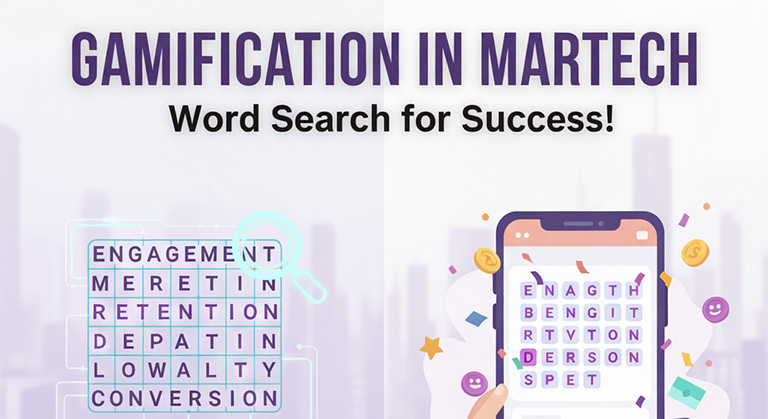
In digital marketing, interactivity is increasingly recognized as a valuable tool to complement conventional communication strategies. Campaigns that engage users through two-way experiences often enable deeper audience connection and provide richer behavioural insights. This case study outlines our approach to building a custom gamified experience — a word search puzzle — developed for a client iWant, in the OTT entertainment sector. The solution was designed to run seamlessly within MoEngage’s On-Site Messaging framework and built with long-term reusability in mind. Objective  The primary goals were:  To create an engaging, brand-aligned activity users could participate in directly on the website.  Collect meaningful data based on how users interact with the activity, rather than through traditional forms or surveys.  Build a modular and adaptable solution that can be easily customized for future campaigns.  Overview  We developed a Word Search Game that:  Was accessible via MoEngage’s on-site messaging (OSM)  Required no backend or third-party libraries  Worked across mobile and desktop environments  Could be easily customized for other use cases  Tracks User Behaviour via Moengage’s event tracking  Martech Word Search Find the hidden marketing terms in the grid. Click and drag to select a word. Can you find all five? Start Game Find The Words Congratulations! You’re a true martech wizard! You found all the words. Play Again     Game Mechanics  The game experience was structured as follows:  Puzzle Grid: A 9×9 board presented to the user, containing five words related to the show’s characters or themes. Words were placed horizontally and vertically. Trait Tracking: The game captures the first three words each user found — representing the traits or themes that stood out most naturally to them. Dynamic Reveal: Based on the user’s selections, the game revealed a character from the show whose profile aligned with the discovered traits. This included:  Character name  Visual illustration  Short description  A call-to-action encouraging the user to subscribe.  Interaction Feedback: Visual animations like confetti and fireworks made the experience more memorable, especially on successful word discoveries. Event Tracking: All key interactions (game start, completion, exit, CTA click) were tracked via MoEngage’s Web SDK for behavioural insights.    Built for Adaptability  A key design principle behind this project was modularity. The entire experience was created using standard HTML, CSS, and JavaScript, which enabled:  Rapid re-theming or styling for different brands or promotions  Easy replacement of word banks and character sets  Support for alternate formats such as trivia, polls, or matching games  This structure ensured that the codebase could be reused across different campaign types with minimal adjustments — an efficient model for teams working across multiple verticals or product categories.    Strategic Benefits  While this specific implementation was built to support a show launch, the core concept is applicable across industries and formats. Gamification strategies like this can offer:  Voluntary participation: Users engage with content by choice, improving relevance  Behavioural insight: Actions provide indicators of interest or personality traits  Personalized experiences: Results and CTAs can be tailored based on user input  Data privacy alignment: user insights are captured through direct interaction, not assumptions  Additionally, embedding gamified experiences directly into platforms like MoEngage enables real-time performance tracking and segmentation without disrupting existing marketing operations.    Conclusion  This project demonstrates how gamification, when thoughtfully integrated, can enrich campaign experiences without adding unnecessary technical complexity. By prioritizing interactivity, customization, and data usefulness, we were able to deliver a marketing component that balanced user engagement with strategic insight.  As brands continue to look for ways to make their digital experiences more interactive, solutions like this provide a flexible and scalable foundation for future innovation. 

Gamification Without the Gimmicks: See What We Built for an OTT Brand | Kunal Yadav | https://www.linkedin.com/in/kunal-yadav-13b200119/ Read More »

The Cost of CRM Over-Automation and How to Simplify Journeys

The Cost of Over-Automation in CRM

In today’s competitive environment, automation is at the heart of modern customer relationship management (CRM). Brands deploy complex lifecycle journeys across email, push notifications, SMS, WhatsApp, and more to nurture customers at every stage.  But while CRM automation promises scale and efficiency, it can easily backfire when not carefully designed and managed.  Instead of delivering seamless, personalized experiences, too many automated journeys can cause confusion — for both customers and internal teams — leading to fatigue, inefficiency, and missed growth opportunities.  In this blog, we unpack the hidden costs of over-automation in CRM and offer a framework to simplify journeys for better outcomes.  Automation’s Promise vs. Reality  At its best, CRM automation helps brands respond quickly, consistently, and contextually to customer behavior. It allows marketers to create tailored touchpoints: onboarding flows, win-back journeys, loyalty nudges, replenishment reminders, and more.  But as organizations scale their CRM programs, complexity creeps in. Teams often add new journeys reactively — for every segment, product, or seasonal campaign — without pausing to check how these flows interact.  The result? A tangled web of automated journeys where:  Customers may enter multiple journeys at once  Messages overlap or contradict each other  Teams lose track of what’s running and why  While automation can be a growth driver, unchecked complexity becomes a growth blocker.    Warning Signs of Over-Automation  How do you know when your CRM automation has crossed the line into over-engineering? Here are some clear signals:  Excessive message frequency: Customers receive too many touchpoints in a short period, increasing opt-outs and unsubscribes.  Conflicting journeys: For example, a customer receives a win-back email even though they’ve just made a purchase and are also in a loyalty campaign.  Declining engagement despite high automation activity: If open, click, and conversion rates fall as journey count rises, this indicates fatigue.  Internal confusion: Marketing and CRM teams can’t easily answer: “Which journeys is this customer in right now? What will they receive next?”  Maintenance challenges: Small changes take too long because journeys are too numerous or interconnected.  These symptoms suggest that your automation is no longer serving your customer or your business effectively.    The Hidden Costs of Over-Automation  Over-automation not only risks damaging customer relationships but also imposes real operational and financial costs:  Customer fatigue: Receiving redundant or irrelevant messages diminishes trust and erodes brand perception.  Inconsistent experience: When journeys overlap, customers may receive mixed messages or offers that don’t align with their recent behavior.  MarTech inefficiency: More journeys mean more assets, rules, exclusions, QA, and maintenance — stretching your team and platform resources.  Missed growth opportunities: Instead of focusing on optimization, teams are busy untangling journeys and fixing conflicts.  In short: automation should save time and drive growth — but over-automation often does the opposite.    Why “Set-and-Forget” Doesn’t Work Anymore  One root cause of over-automation is the belief that once journeys are built and launched, they can run indefinitely.  But customer behavior, product lines, channels, and market conditions evolve rapidly. Static journeys built months (or years) ago may no longer reflect how your customers engage.  Example: A journey built around email touchpoints might ignore that your customer base has shifted toward mobile-first behavior — preferring WhatsApp or in-app messaging.  Good CRM programs require active management — not endless accumulation.    How to Simplify and Optimize Your CRM Journeys  Simplification doesn’t mean reducing communication or “doing less marketing.” It means making journeys clearer, more intentional, and easier to manage — ultimately improving customer experience and business outcomes.  Here’s how to approach it:  Audit existing journeys  Start by listing every live journey, the triggers that start them, the audiences they target, and their overlap.  Identify:  Journeys that conflict  Redundant journeys targeting the same segment  Legacy journeys no longer aligned to your current goals  Map journeys to key lifecycle stages  Rather than dozens of fragmented journeys, design a clear structure around moments that matter:  Acquisition and onboarding  Engagement and education  Loyalty and reactivation  Win-back and churn prevention  Every journey should serve a defined purpose and align to these stages.  Prioritize behavioral triggers over static sequences  Simpler CRM design focuses on responsive journeys — activating based on user behavior — rather than rigid, time-based sequences.  Example:  Instead of a 7-day drip for every new lead, send a follow-up only if they haven’t acted after Day 2.  This reduces unnecessary messaging and improves relevance.  Define journey ownership  Ensure your internal teams know:  Who owns each journey  How to adjust logic when needed  How journeys interact (avoid one team layering journeys on top of another)  A clear governance framework is critical as you simplify.    Case Example: Simplifying CRM for Better Results  For one retail client, we encountered over 30 live CRM journeys — many overlapping and targeting the same users.  We worked with them to:  Consolidate these into 8 core journeys mapped to key lifecycle stages  Align all messaging cadence and channel mix  Improve relevance by focusing on behavior-driven triggers  Result:Fewer journeys, clearer communication, and a measurable 1.8x lift in engagement rates — all without increasing message volume.    Conclusion: Better Automation, Not Less Automation  Over-automation is a hidden but costly problem in modern CRM programs. It leads to customer confusion, team inefficiency, and declining performance.  The solution isn’t to stop automating — it’s to automate better. Simplification means fewer, smarter journeys that respond to customer behavior and business goals.  At ConSoul, we help brands audit, simplify, and optimize their CRM architecture so that automation serves its purpose: delivering timely, relevant, and measurable engagement.    Is your CRM journey landscape too complex? Let’s discuss how to simplify and improve performance.  Contact us at hello@consoulsolution.com for a conversation.

The Cost of Over-Automation in CRM Read More »

How to Build a Customer Retention Strategy Without Discounts

How to Build a Retention Strategy That Doesn’t Rely on Discounts

  Introduction: The Discount Trap in Retention  Discounting is an instinctive move when retention becomes a challenge. When customer churn rises or repeat rates fall, offering “20% off your next order” seems like a quick win. But while discounts might temporarily lift transactions, they do not solve the core problem of weak customer relationships.  In reality, discounts often mask deeper engagement issues. The hidden costs are substantial:  Margin erosion eats into profitability.  Customers become deal-seekers, commoditizing your offering.  Loyalty becomes fragile: customers stick around only until a better deal appears elsewhere.  Retention rooted in discounts is retention built on sand. Sustainable retention demands a better approach: building emotional equity and delivering experiences that make customers want to stay — not just transact.  Rethinking Retention: Loyalty Built on Behavior  Loyalty is frequently misunderstood as a transactional metric: spend more, stay longer. But true loyalty goes deeper — it is about emotional equity, not price elasticity.  Behavior-based loyalty means understanding what your customer values and designing engagements that reinforce those values. This could mean helping them discover new benefits of your product, recognizing key milestones in their journey, or simply being relevant when they need you most.  Retention should be a reflection of how well you understand your customer’s context — their needs, habits, and preferences. When you build this understanding, stickiness happens organically. Customers return because they value the relationship, not because they’re waiting for another coupon.  Behavioral Insight as the Foundation  A retention strategy that moves beyond discounts must be grounded in behavioral insight.  Collecting Behavioral Signals Beyond Purchases  Purchases are just the tip of the iceberg. The richer picture emerges from signals like:  Browse depth: How far do users go when exploring your catalog?  Repeat visits: How often do they return even if they don’t buy?  Feature adoption: What parts of your service or product are they using most?  These signals give you context on interest, intent, and friction points.  The Value of Passive and Active Engagement Signals  It’s important to capture both passive behaviors (scroll depth, session duration) and active behaviors (wishlist additions, referrals). Together, these reveal where customers are leaning in and where they might be slipping away.  Segmenting Users by Behavioral Profiles  Many brands still segment by traditional methods — high spenders vs low spenders, or frequency of purchase. A modern approach layers behavioral profiling: segmenting by exploration patterns, engagement preferences, and lifecycle stage.  This enables tailored interventions that resonate with what customers are actually doing, not just what they’ve bought.  Personalized Journeys: Experiences that Matter  Generic lifecycle campaigns — welcome emails, monthly newsletters, blanket winback offers — no longer cut it. Personalization is the linchpin of non-discount retention.  From One-Size-Fits-All to Individualized Communication Every customer journey is different. Personalization means adapting communications and touchpoints based on:  Where they are in the lifecycle  Their historical engagement  Predictive signals of their intent or disengagement  Behavior-Led Lifecycle Journeys  Examples include:  Onboarding: Educating a new customer on product benefits based on what they browsed pre-purchase.  Milestone engagement: Recognizing when a customer completes their first three purchases — without resorting to discounts.  Early drop-off rescue: Intervening when a customer shows declining engagement patterns, e.g., fewer app opens or shorter session times.  Avoiding Excessive Nudges  Critical to this approach is respecting the customer’s attention. Excessive notifications or irrelevant nudges backfire and accelerate churn. Smart personalization ensures communications are timely, valuable, and never intrusive.  Measuring Retention Health Without Relying on Discounts  A behavior-led retention strategy also needs better measurement frameworks.  RFM, Cohort Analysis, and Propensity Models  Key analytical tools:  RFM (Recency, Frequency, Monetary) analysis: Understand value and engagement recency.  Cohort analysis: Identify how behavior and retention vary by acquisition cohort.  Churn propensity models: Predict who is at risk before churn happens.  Engagement Metrics as Leading Indicators  Retention is often measured retrospectively — did they return, did they purchase? A smarter approach uses engagement metrics as leading indicators:  Declining session durations  Reduced interaction with key features  Fewer responses to past communications  These offer an early warning system for intervention before churn becomes visible.  Feedback Loops  Qualitative feedback complements behavioral insight:  In-app surveys  Exit interviews  Periodic NPS pulses  This gives context to quantitative signals and surfaces “why” behind disengagement.  Case Studies & Real-World Examples  Consider the case of a D2C wellness brand that saw rising churn after the first order. Instead of offering repeat-purchase discounts, they analyzed post-purchase behavior:  Insight: Customers weren’t using key features that would help integrate the product into their routines.  Action: They launched behavior-led onboarding journeys personalized to product type, helping customers establish early habits.  Result: Retention rose by 18% without discount incentives.  In the OTT space, platforms have successfully mitigated silent churn — customers who stop watching but don’t cancel — by identifying behavioral drop-offs (e.g., decreasing watch duration) and intervening with tailored recommendations, not discounts.  These examples illustrate that retention is a function of understanding and responding to behavior, not bribing users to stay.  Building Internal Capability for Non-Discount Retention  Executing this kind of strategy requires teams and tools purpose-built for behavioral insight.  Teams and Tooling  CRM platforms: To orchestrate personalized journeys.  Analytics capability: To track and interpret behavioral signals.  Experimentation frameworks: To test and learn what drives engagement.  Tech-Agnostic Strategy  Importantly, the strategy matters more than the stack. Whether you use Clevertap, WebEngage, Braze, or something else — behavioral retention depends on how you use the tools, not the tools themselves.  Conclusion: From Transaction to Relationship  Retention without discounts is not just a viable strategy — it’s a sustainable one. It protects margins, builds stronger relationships, and insulates your brand from commoditization.  If your current retention strategy is dominated by discount offers, it’s time for a reset. Audit your retention levers:  What behavioral signals are you tracking?  Are you personalizing based on behavior or relying on static journeys?  How early can you detect disengagement?  Retention success starts when you treat every customer as more than just a potential transaction — and when you build journeys that respect their behavior, preferences, and context. 

How to Build a Retention Strategy That Doesn’t Rely on Discounts Read More »